Tuesday, September 2, 2014

Book Marketing on Steroids

This post is likely to annoy some, anger others and spur a different group to aim higher. Why annoy? Because some of my writer friends think every writer should have this kind of marketing support. Why anger? Because some of this came about during negotiations between an agent and a publisher. Why spur on and encourage? Because the more we write, the better we get as writers and marketeers. The better we get, the better our sales. And the greater the possibility we have to land one of these contracts where more is done for us.

A bit of background before I dissect this full-page ad from Publishers Weekly. Sharyn McCrumb is a long-time NYT bestselling author. Her ballad novels featuring Nora Bonesteel are continuing favorites. There hasn't been a new one in a long time. This novella comes ready made for success.

That said, Abingdon Press, which has been around for 200+ years, is throwing a ton of effort behind this release. Let's parse this ad.

  1. 100-copy early reader campaign. Most of us with small press contracts are lucky to have 10-15 copies to send out. We have to badger our publishers for the Kindle file to attract reviewers. Many of the names for the early readers came from Sharyn herself, but not all. Some came from the publisher knowing who the best earlier readers in her genre are. All are expected to review the book. 
  2. 100-copy radio reviewers promo. I don't know 100 radio reviewers. I would need a PR specialist to help with this.
  3. Multi-media publicity campaign. I know most of my local newspaper and magazine publishers. Outside of a 50-mile radius, I'm just another writer looking for column inches. I can send press releases and hope, but it helps if you know someone at the publication to grease the skids. As far as national book review pubs, again it's rather a crap shoot as to whether my book will be reviewed or not. I have to try, but I would rather have a bit of help to attract attention.
  4. Author signings at large festivals and book fairs. NYT bestsellers do well because they have support.  If an indie or small press author gets in, it's a lonely place. If you are with a publishing company that has high visibility. you'll be overwhelmed. Otherwise, you're likely to be underwhelmed.
  5. 20-stop regional author tour in southeast. Again, having a large publisher behind you to set up the appointments helps bring bodies and dollars to your events. You can do it yourself given enough time and contacts. If your book will attract a regional audience through its subject, you'll have a better chance of doing this on your own.
  6. National print and online advertising. Not likely if you are with a small press or on your own. I don't have deep pockets to pay for advertising.
  7. #NoraIsBack social medial campaign. All of us can do this. We can register our book titles and put together social media events. It takes time that you might not be able to spend.
  8. Online reading group guides. We should all have these on our web pages. If our publishers will print the guides at the back of the book, all the better. Some will; others won't. AT least put these on your websites, along with topics you are qualified to talk about.
  9. Abingdon Book club and blogger program. This works if your publisher has such programs. If not, you're on your own.
Is this all bad news for indie and small press published writers? No, because there are several things in this list we can all do without spending a boatload of money. We'll spend a boatload of time, thought. It's hard to figure out how to divide our time between promotion and writing the next book. We are often reminded that selling books is a marathon, not a sprint. True, but publishers would like to see a return on their investment in publishing our works. So would we.

We have to be smart to control the stress of feeling we have to do it all. Good publishers and agents can and should help. Alas, not all do.

Monday, September 1, 2014

Book Review: For I Have Sinned by Kristen Houghton

For I Have SinnedFor I Have Sinned by Kristen Houghton

My rating: 5 of 5 stars

I'll start by saying I'm really pissed off at Kristen Houghton. Her well-written book cost me a good night's sleep, because I stayed up waaay too late to finish it. I've read several things by this writer and liked them. Without a doubt, this is her best book yet.

Kristen Houghton proves there is room for one more tough, sexy PI with the introduction of Cate Harlow, who takes her place alongside PI Warshawski and Stephanie Plum.

Houghton takes a lead from the headlines to discuss pedophilia in the priesthood. A year before the book opens, Cate found the body of a terribly mutilated man. The story is buried; the man was not. Ten years later in current time, she takes a job to find a teen who vanished the same year as the murder. The missing person case is long cold, but Cate displays a soft heart for the downtrodden. A well-drawn character with many levels of meaning, she begins delving into what happened to the boy when her ex husband and homicide detective calls her in the middle of the night to come to a crime scene. There she sees the mutilated body of another man, this one wearing a priest's collar, a lot of blood and nothing else.

The new murder is eerily similar to the older one, although the first body wasn't identified as a priest. She is troubled by the collar and a Latin message written inside. Cate and Will, the ex, combine with Cate's current boyfriend, the medical examiner, to figure out what happened.

Secondary characters are fully fleshed out, providing a rich tapestry of human behavior, desire and motive. From a pair of homeless men to a friendly neighbor to a mysterious man who appears without much warning, Houghton gives us characters that are real. You want to know what happens to them. You want to know their history, their backstory if you will. You want to know how each fits into the tapestry of a terrible murder.

The book is fast paced, well written and brings to light a delightful character in Cate Harlow and a wonderful contrasting pair of lovers. This first in a series promises hours of page-turning reading.

Friday, August 22, 2014

Book Fairs

I've gone to two book fairs so far this year. I have three more scheduled. Last year I did many more. So why did I cut back this year? Several reasons.

About the best most of us can hope for is a few dozen books sold at a fair. These usually run one day from ten in the morning until sometime between two and four in the afternoon. Others run two days. Since some require an overnight stay due to distance, writers should factor in the expenses when deciding whether or not to go to a fair. If you draw a largish crowd at your table, you'll have to worry about spending only a few minutes with each buyer.

We meet fellow writers on the same circuit and catch up on family and friends. I caught up with Arnetta Philpott Hairston who brings her son's books to events until he's able to do it himself.

Let's do the math. Say I have a great fair. I meet with 30-40 readers, some of whom are already part of the Mad Max "family," while others are shopping for a new book with different characters. Say I sell 25 books at the fair. Now factor in five such events a year. I'd be able to reach 150-200 readers and sell 125 books. Add in at least one overnight for one of the fairs, plus gasoline, food, etc., and the return on each book sold quickly goes into the negative.

But how else do we reach our readers, you howl. I want to do book signings and be loved by my readers, you whimper. I want to thank them for buying my book, for supporting my writing efforts. It's a conundrum most debut writers face. We won't have the big book tours paid for by our publishers. We won't pack Barnes and Noble through having a poster in the window and a small blurb in the papers. We won't be on the Today Show, NPR, Oprah or CNN's book show. We won't have a publicist pushing us here and there, guiding us through the pits of marketing, unless we hire one. We have to do the work ourselves. That said, we have to be smart about how we spend our time.

I wondered if I was crying into the wilderness until I read a piece in the Wall Street Journal last weekend. Titled "Fiction's Digital Alchemist," the article features how Paulo Coelho, everything best selling author (NYT, USA Today, etc.) has changed his outlook on marketing. The article laid it out pretty clearly. Before he cut out book events, he calculated the following:

"In the past, each reader at a book signing would ask him to autograph about three novels (he has 27 out) and pose for a photo, amounting to a two-minute encounter. All told, that meant interacting with maybe 90 readers at a few dozen book events each year." Oh phooey. My estimates are way too high. Sigh.

He goes on: "Now he can write 'at least one kind word' to roughly 30 people a day and reach more than 10,000 a year. In the past six months, he has gained 4.1 million fans on Facebook through "likes" on his page."

And that, my fellow writers, is a good use of time.

Several years ago, I heard a middle grade author talk about answering every personal tweet. Granted, she only said things like "OMG. So happy you loved my story. Happy face." She kept a small file of  responses which she cut and pasted into her responses. Her fans stayed and were very happy.

For those of us who have day jobs, or who are shy and don't like to put themselves in front of people, or who may not be able to travel for a whole host of reasons, this might serve as a trail guide for reaching readers. I put together a daily timeline for responding to email, FB and Twitter. I alternate between writing and interacting. It's easy and takes the stress away from balancing reaching out and writing down.

I answer every, and I mean every, personal note. My numbers on FB, LinkedIn, Goodreads and Twitter continue to grow. My newsletter has nearly 1000 members. Can I say that any of these activities leads directly to sales? No, but if I don't do anything, I guarantee I will turn inactivity into no sales at all.

Now I figure out how these contacts translate into sales. Wish me luck.

Tuesday, August 12, 2014

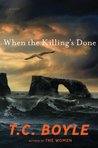
Book Review: When the Killing's Done by T.C. Boyle

When the Killing's DoneWhen the Killing's Done by T.C. Boyle

My rating: 3 of 5 stars

I listened to the audio version of T.C. Boyle's When the Killing's Done, read by Anthony Heald. I'm glad I did, because I might not have finished reading it.

Boyle's unusual subject of killing invasive animals in the Channel Islands off the coast of California brings to light the controversy that rocked California years ago. A park service biologist pits herself against members of PETA and a fictitious group of animal rights advocates who want to stop the slaughter of feral pigs and rats. Straightforward enough, except the narrative ranges across three generations, multiple downings and boat sinkings and too many characters whose names begin with the same letter. I found it hard to keep up with Alma, Anise, Anabelle and others whose names began with A.

Not only does the narrative range back and forward in time, it is presented from the point of view of several characters. I'm sure seeing the character's name on the page would have helped. All the characters are brought together through the generations by the end of the book, which in this reader's mind was forced.

Head-hopping, i.e., written from differing points of view, often within the same paragraph, and characters with similar sounding names make the reader work hard to stay with the book to the end.

So, why the three stars? Because the reader was excellent. Alma, the biologist and protagonist, has fairly a straight-line thought process, although when she slips into confusion, and when Heald uses his pacing to portray that confusion, the book surges. Dave LaJoy, the antagonist, is full of anger, which might have become tedious on the printed page. Again, Heald saves the day with his rush of anger and near breathless delivery.

Would I recommend reading it? Only if you like convoluted sentences and tortured thoughts. Would I recommend it as an audio book? Definitely. Heald made all the difference in whether I cared for the characters or not.

Monday, August 4, 2014

Book Review: Duty: Memoirs of a Secretary at Way by Robert Gates

Duty: Memoirs of a Secretary at WarDuty: Memoirs of a Secretary at War by Robert M. Gates

My rating: 4 of 5 stars

Robert Gates' book provides extraordinary insight into the behind-the-scenes working of two presidencies. The title alone is telling: Memoirs of a Secretary at War. Not a Secretary of Defense, but a secretary at war.

Nowhere in this book does Gates forget to remind us he served in the Department of Defense when the U.S. was conducting two unpopular wars. Nowhere does he denounce the two presidents he served as SecDef, Bush 43 and Obama.

Gates details his support for his troops in nearly every interaction he has with the White House and Congress. He is critical of the White House under both presidents, often railing against principals who have really very little experience with the troops, micromanagement and political realities where budgets are approved or not based not on the actual needs of wartime reality. In most cases, math trumped approved strategies.

Late in a book that would have benefited from tight editing, he takes on Congress: "Uncivil, incompetent in fulfilling basic constitutional responsibilities (such as timely appropriations, micromanagerial, parochial, hypocritical, egotistical, thin-skinned, often putting self (and reelection) before country--this was my view of the United States Congress." He pulls few punches.

Gates is an angry man. He is also a fair man, taking responsibility for his actions and fighting for the troops.

For all his candor, he writes: "I was put off by the way the president (Obama) closed the meeting. To his very closest advisers, he said, 'For the record, and for those of you writing your memoirs, I am not making decisions about Israel or Iran.' I was offended by his suspicion that any of us would ever write about such sensitive matters."

And yet Gates did. While the current president is still in office. One wonders what his motive was.

Monday, July 21, 2014

Book Review: Imagine: The Story of a Song

IMAGINE: The Story of a SongIMAGINE: The Story of a Song by Charles J. Shields

My rating: 5 of 5 stars

I try not to thrust myself in the middle of a book review, but this time I refuse to restrain myself. Charles Shields takes one of my favorite songs, an anthem for peace, and provides backstory on how the song was written. This slender book treats the song with the dignity it deserves. By delving into the backgrounds of John Lennon and Yoko Ono, of their formative years against war-torn Japan and England, the privations they suffered and their dedication to their respective art forms, he brings a new dimension to appreciating a song that defines a generation and defies time.

Many who came to love John Lennon's music more recently mistake this for a Beatles song. By the time this was written, the Beatles were no more. Couple this with "Give Peace a Chance." Lennon and Ono were on a path to share messages of peace and love through music. Imagine might be the best song written by Lennon. It might be the best song ever written. That's a matter of personal preference. For me, it's the voice of my generation seeking to give mankind a second chance to "get it right."

This slim volume is not a book about the Beatles. Not a book about John Lennon himself. A book about a song, what influenced the writer, how it came into being, what was happening in the life of the writer and singer.

I recommend this to anyone who has ever been moved by lyrics and melody. Imagine has both. If I could write any song ever, it would be this one.

View all my reviews on Goodreads

Tuesday, June 3, 2014

Book Review: Caught by Deirdre Thurston

Deirdre Thurston's collection of essays and short stories is a delightful escape for summer reading. A combination of universal themes of friendship, love and loss, guilt and memories overlaid with a strong dose of New Zealand phraseology takes the reader down familiar paths that often end with an unusual twist.

"Love Story," a nostalgic memory of a grandmother, is triggered by an elderly couple who sit next to the narrator in a movie theater. From the way the woman is dressed to the scent of talc, the narrator indulges is a series of memories, often wondering if the woman sitting near her has similar memories.

"Mae" takes the reader into a family tragedy where a child dies in a hot bath. Here the narrator faces guilt at the loss of her younger sister. Events from decades earlier still color the narrator's memory of that dreadful day.

"Ali" brings two best friends together to catch up on their lives. One is married, a bit dumpy and settled; the other is oft-married, elegant and in love with a long-distance trucker.

Painful memories of birthdays past where narrators don't receive recognition or gifts they want. Celebrations of a daughter turning twenty-one. A longing to learn to ride a bike when the narrator thinks she's too old and plump. Each story, each essay is a small gem waiting for you to find and polish it.