Sometimes I buy a book because I think it will be good for research in the future. I usually scan it, pick up and read random chapters and put it on the shelf. Then I bought 400 Things Cops Know: Street-Smart Lessons from a Veteran Patrolman by Adam Plantinga, I thought I'd follow the same pattern. So did not happen.
I don't know what I expected, but Plantinga delivered so much more information in a way that made this list of "things" a page turner. Well written with terrific organization, the book falls into chapters like "16 Things Cops Know about Booze and Drugs." Each chapter has a theme and a series of short entries. "You'll read about people on their fifth DUI conviction, their seventh, their ninth. It's enough to make you look around at the way other countries do things. Drive drunk in Finland and the punishment is a year of hard labor."
"If you encounter an assault victim in the 'hood who has been punched in the mouth and is missing teeth, ask him if his teeth were knocked out tonight or had they already been like that. It is a wholly appropriate question, for dental hygiene is one of many casualties of the urban environment."
For a writer, Plantinga's blunt and often humorous style should help us be better writers. Why? Because for one thing, he takes us inside a cop's head so we can look at the world through his eyes. Because he debunks so much of what we watch on television. It should come as no shock that the needs for visual drama trump policing procedures.
Take the Miranda bugaboo. Cops in real life don't immediately read a perp his rights. "As a police officer, you are required to read someone their rights only after they are in police custody and you have begun interrogating them about an offense. Custody plus interrogation equals Miranda, not before."
Chasing a perp isn't high on Plantinga's list of preferred activities. Many reasons. You don't usually stand a chance of catching a fleet-footed youth. You don't know what's around the corner and down an alley. You may have spent too much time at the Donut Diner. And female cops and detectives NEVER, EVER chase a suspect in high heels. Sure way to break an ankle. Besides, you won't catch him.
I ordered this before it was released. When it arrived, I fell on it like a starving person finding a chocolate cache.
For my mystery writer peeps out there, stop reading this and order it. Read it. Return to it often. I plan to.
Thoughts on writing, book reviews, guest bloggers who are writers, and other writing-related musings. Check out my novel, Mad Max Unintended Consequences, on Amazon (http://amzn.to/16wZr4d )
Wednesday, October 1, 2014
Tuesday, September 16, 2014
Book Review: The Forest for the Trees by Betsy Lerner
First of all, I love any writer who shares a first name with me. Betsy Lerner and I are also writers. Beyond that, I doubt there are many similarities.
Lerner divides her book into two main sections: writing and publishing. She makes clear that these are not the same, although no one is published without writing first. She explains that there are different types of writers. The ambivalent writer has so many ideas for projects that few if any are begun, let alone finished. The natural writer, a rare beast, perhaps even an endangered species, seems to have all the right words in all the right order without having to learn the craft of writing. The wicked child uses her family as the jumping off point for characters and plots. Right or wrong, often she trashes her family all in the name of art. Others are the self-promoter, the neurotic and those touching fire. Most writers will find themselves in one if not more of her types.
In the second half of the book, publishing, Lerner gives terrific advice on seeking and landing an agent (she herself is one and knows of what she writes), handling rejection (even Stephen King garnered a stack of rejections before his first sale), knowing what editors are looking for, knowing what you as a writer wants, working on the book with your editor and marketing your work after publication.
I recommend this to anyone who is starting out as a writer. Lerner pulls no punches yet leaves you laughing at some of her lessons. They serves beginning authors well. Those of us who have published a book or books already can still learn from this book. It's a reference book full of common sense and oft overlooked advice on how to behave as a writer.
It should be on every writer's bookshelf -- after the writer has read it.
Lerner divides her book into two main sections: writing and publishing. She makes clear that these are not the same, although no one is published without writing first. She explains that there are different types of writers. The ambivalent writer has so many ideas for projects that few if any are begun, let alone finished. The natural writer, a rare beast, perhaps even an endangered species, seems to have all the right words in all the right order without having to learn the craft of writing. The wicked child uses her family as the jumping off point for characters and plots. Right or wrong, often she trashes her family all in the name of art. Others are the self-promoter, the neurotic and those touching fire. Most writers will find themselves in one if not more of her types.
In the second half of the book, publishing, Lerner gives terrific advice on seeking and landing an agent (she herself is one and knows of what she writes), handling rejection (even Stephen King garnered a stack of rejections before his first sale), knowing what editors are looking for, knowing what you as a writer wants, working on the book with your editor and marketing your work after publication.
I recommend this to anyone who is starting out as a writer. Lerner pulls no punches yet leaves you laughing at some of her lessons. They serves beginning authors well. Those of us who have published a book or books already can still learn from this book. It's a reference book full of common sense and oft overlooked advice on how to behave as a writer.
It should be on every writer's bookshelf -- after the writer has read it.
Wednesday, September 10, 2014
Book Review: Mindhunter: Inside the FBI's Elite Serial Crime Unit by John Douglas
Mindhunter: Inside the FBI's Elite Serial Crime Unit by John E. DouglasMy rating: 4 of 5 stars on Goodreads
John Douglas has written a reference book that belongs on the desk of any crime writer. Even though not every writer discusses the FBI's serial crime or the behavioral analysis units, this study into the mind of criminals opens endless possibilities for topics while at the same time reinforces the effort these brave agents go through to solve some of the most bizarre crimes. The model for Jack Crawford in The Silence of the Lambs, Douglas detailed profiles, habits and next moves to give law enforcement officers new tools to use in their fight against crime.
Through interviews with many of the most notorious serial killers and mass murderers, Douglas takes the reader inside their minds. From Charles Manson, who had to sit on the back of a chair to appear taller than he was, to Richard Speck, who murdered nurses in South Chicago, Douglas holds little back. Evil people are portrayed in all their evilness. This journey leaves the reader wanting a hot shower, sleeping with the lights on and jumping at every strange sound in familiar surroundings.
Chilling and yet fascinating, the reader will want to turn away but won't be able to.
Tuesday, September 2, 2014
Book Marketing on Steroids
This post is likely to annoy some, anger others and spur a different group to aim higher. Why annoy? Because some of my writer friends think every writer should have this kind of marketing support. Why anger? Because some of this came about during negotiations between an agent and a publisher. Why spur on and encourage? Because the more we write, the better we get as writers and marketeers. The better we get, the better our sales. And the greater the possibility we have to land one of these contracts where more is done for us.
A bit of background before I dissect this full-page ad from Publishers Weekly. Sharyn McCrumb is a long-time NYT bestselling author. Her ballad novels featuring Nora Bonesteel are continuing favorites. There hasn't been a new one in a long time. This novella comes ready made for success.
That said, Abingdon Press, which has been around for 200+ years, is throwing a ton of effort behind this release. Let's parse this ad.
A bit of background before I dissect this full-page ad from Publishers Weekly. Sharyn McCrumb is a long-time NYT bestselling author. Her ballad novels featuring Nora Bonesteel are continuing favorites. There hasn't been a new one in a long time. This novella comes ready made for success.
That said, Abingdon Press, which has been around for 200+ years, is throwing a ton of effort behind this release. Let's parse this ad.
- 100-copy early reader campaign. Most of us with small press contracts are lucky to have 10-15 copies to send out. We have to badger our publishers for the Kindle file to attract reviewers. Many of the names for the early readers came from Sharyn herself, but not all. Some came from the publisher knowing who the best earlier readers in her genre are. All are expected to review the book.
- 100-copy radio reviewers promo. I don't know 100 radio reviewers. I would need a PR specialist to help with this.
- Multi-media publicity campaign. I know most of my local newspaper and magazine publishers. Outside of a 50-mile radius, I'm just another writer looking for column inches. I can send press releases and hope, but it helps if you know someone at the publication to grease the skids. As far as national book review pubs, again it's rather a crap shoot as to whether my book will be reviewed or not. I have to try, but I would rather have a bit of help to attract attention.
- Author signings at large festivals and book fairs. NYT bestsellers do well because they have support. If an indie or small press author gets in, it's a lonely place. If you are with a publishing company that has high visibility. you'll be overwhelmed. Otherwise, you're likely to be underwhelmed.
- 20-stop regional author tour in southeast. Again, having a large publisher behind you to set up the appointments helps bring bodies and dollars to your events. You can do it yourself given enough time and contacts. If your book will attract a regional audience through its subject, you'll have a better chance of doing this on your own.
- National print and online advertising. Not likely if you are with a small press or on your own. I don't have deep pockets to pay for advertising.
- #NoraIsBack social medial campaign. All of us can do this. We can register our book titles and put together social media events. It takes time that you might not be able to spend.
- Online reading group guides. We should all have these on our web pages. If our publishers will print the guides at the back of the book, all the better. Some will; others won't. AT least put these on your websites, along with topics you are qualified to talk about.
- Abingdon Book club and blogger program. This works if your publisher has such programs. If not, you're on your own.
Is this all bad news for indie and small press published writers? No, because there are several things in this list we can all do without spending a boatload of money. We'll spend a boatload of time, thought. It's hard to figure out how to divide our time between promotion and writing the next book. We are often reminded that selling books is a marathon, not a sprint. True, but publishers would like to see a return on their investment in publishing our works. So would we.
We have to be smart to control the stress of feeling we have to do it all. Good publishers and agents can and should help. Alas, not all do.
Monday, September 1, 2014
Book Review: For I Have Sinned by Kristen Houghton
For I Have Sinned by Kristen HoughtonMy rating: 5 of 5 stars
I'll start by saying I'm really pissed off at Kristen Houghton. Her well-written book cost me a good night's sleep, because I stayed up waaay too late to finish it. I've read several things by this writer and liked them. Without a doubt, this is her best book yet.
Kristen Houghton proves there is room for one more tough, sexy PI with the introduction of Cate Harlow, who takes her place alongside PI Warshawski and Stephanie Plum.
Houghton takes a lead from the headlines to discuss pedophilia in the priesthood. A year before the book opens, Cate found the body of a terribly mutilated man. The story is buried; the man was not. Ten years later in current time, she takes a job to find a teen who vanished the same year as the murder. The missing person case is long cold, but Cate displays a soft heart for the downtrodden. A well-drawn character with many levels of meaning, she begins delving into what happened to the boy when her ex husband and homicide detective calls her in the middle of the night to come to a crime scene. There she sees the mutilated body of another man, this one wearing a priest's collar, a lot of blood and nothing else.
The new murder is eerily similar to the older one, although the first body wasn't identified as a priest. She is troubled by the collar and a Latin message written inside. Cate and Will, the ex, combine with Cate's current boyfriend, the medical examiner, to figure out what happened.
Secondary characters are fully fleshed out, providing a rich tapestry of human behavior, desire and motive. From a pair of homeless men to a friendly neighbor to a mysterious man who appears without much warning, Houghton gives us characters that are real. You want to know what happens to them. You want to know their history, their backstory if you will. You want to know how each fits into the tapestry of a terrible murder.
The book is fast paced, well written and brings to light a delightful character in Cate Harlow and a wonderful contrasting pair of lovers. This first in a series promises hours of page-turning reading.
Friday, August 22, 2014
Book Fairs
I've gone to two book fairs so far this year. I have three more scheduled. Last year I did many more. So why did I cut back this year? Several reasons.
About the best most of us can hope for is a few dozen books sold at a fair. These usually run one day from ten in the morning until sometime between two and four in the afternoon. Others run two days. Since some require an overnight stay due to distance, writers should factor in the expenses when deciding whether or not to go to a fair. If you draw a largish crowd at your table, you'll have to worry about spending only a few minutes with each buyer.
We meet fellow writers on the same circuit and catch up on family and friends. I caught up with Arnetta Philpott Hairston who brings her son's books to events until he's able to do it himself.
Let's do the math. Say I have a great fair. I meet with 30-40 readers, some of whom are already part of the Mad Max "family," while others are shopping for a new book with different characters. Say I sell 25 books at the fair. Now factor in five such events a year. I'd be able to reach 150-200 readers and sell 125 books. Add in at least one overnight for one of the fairs, plus gasoline, food, etc., and the return on each book sold quickly goes into the negative.
But how else do we reach our readers, you howl. I want to do book signings and be loved by my readers, you whimper. I want to thank them for buying my book, for supporting my writing efforts. It's a conundrum most debut writers face. We won't have the big book tours paid for by our publishers. We won't pack Barnes and Noble through having a poster in the window and a small blurb in the papers. We won't be on the Today Show, NPR, Oprah or CNN's book show. We won't have a publicist pushing us here and there, guiding us through the pits of marketing, unless we hire one. We have to do the work ourselves. That said, we have to be smart about how we spend our time.
I wondered if I was crying into the wilderness until I read a piece in the Wall Street Journal last weekend. Titled "Fiction's Digital Alchemist," the article features how Paulo Coelho, everything best selling author (NYT, USA Today, etc.) has changed his outlook on marketing. The article laid it out pretty clearly. Before he cut out book events, he calculated the following:
"In the past, each reader at a book signing would ask him to autograph about three novels (he has 27 out) and pose for a photo, amounting to a two-minute encounter. All told, that meant interacting with maybe 90 readers at a few dozen book events each year." Oh phooey. My estimates are way too high. Sigh.
He goes on: "Now he can write 'at least one kind word' to roughly 30 people a day and reach more than 10,000 a year. In the past six months, he has gained 4.1 million fans on Facebook through "likes" on his page."
And that, my fellow writers, is a good use of time.
Several years ago, I heard a middle grade author talk about answering every personal tweet. Granted, she only said things like "OMG. So happy you loved my story. Happy face." She kept a small file of responses which she cut and pasted into her responses. Her fans stayed and were very happy.
For those of us who have day jobs, or who are shy and don't like to put themselves in front of people, or who may not be able to travel for a whole host of reasons, this might serve as a trail guide for reaching readers. I put together a daily timeline for responding to email, FB and Twitter. I alternate between writing and interacting. It's easy and takes the stress away from balancing reaching out and writing down.
I answer every, and I mean every, personal note. My numbers on FB, LinkedIn, Goodreads and Twitter continue to grow. My newsletter has nearly 1000 members. Can I say that any of these activities leads directly to sales? No, but if I don't do anything, I guarantee I will turn inactivity into no sales at all.
Now I figure out how these contacts translate into sales. Wish me luck.
About the best most of us can hope for is a few dozen books sold at a fair. These usually run one day from ten in the morning until sometime between two and four in the afternoon. Others run two days. Since some require an overnight stay due to distance, writers should factor in the expenses when deciding whether or not to go to a fair. If you draw a largish crowd at your table, you'll have to worry about spending only a few minutes with each buyer.
We meet fellow writers on the same circuit and catch up on family and friends. I caught up with Arnetta Philpott Hairston who brings her son's books to events until he's able to do it himself.
Let's do the math. Say I have a great fair. I meet with 30-40 readers, some of whom are already part of the Mad Max "family," while others are shopping for a new book with different characters. Say I sell 25 books at the fair. Now factor in five such events a year. I'd be able to reach 150-200 readers and sell 125 books. Add in at least one overnight for one of the fairs, plus gasoline, food, etc., and the return on each book sold quickly goes into the negative.
But how else do we reach our readers, you howl. I want to do book signings and be loved by my readers, you whimper. I want to thank them for buying my book, for supporting my writing efforts. It's a conundrum most debut writers face. We won't have the big book tours paid for by our publishers. We won't pack Barnes and Noble through having a poster in the window and a small blurb in the papers. We won't be on the Today Show, NPR, Oprah or CNN's book show. We won't have a publicist pushing us here and there, guiding us through the pits of marketing, unless we hire one. We have to do the work ourselves. That said, we have to be smart about how we spend our time.
I wondered if I was crying into the wilderness until I read a piece in the Wall Street Journal last weekend. Titled "Fiction's Digital Alchemist," the article features how Paulo Coelho, everything best selling author (NYT, USA Today, etc.) has changed his outlook on marketing. The article laid it out pretty clearly. Before he cut out book events, he calculated the following:
"In the past, each reader at a book signing would ask him to autograph about three novels (he has 27 out) and pose for a photo, amounting to a two-minute encounter. All told, that meant interacting with maybe 90 readers at a few dozen book events each year." Oh phooey. My estimates are way too high. Sigh.
He goes on: "Now he can write 'at least one kind word' to roughly 30 people a day and reach more than 10,000 a year. In the past six months, he has gained 4.1 million fans on Facebook through "likes" on his page."
And that, my fellow writers, is a good use of time.
Several years ago, I heard a middle grade author talk about answering every personal tweet. Granted, she only said things like "OMG. So happy you loved my story. Happy face." She kept a small file of responses which she cut and pasted into her responses. Her fans stayed and were very happy.
For those of us who have day jobs, or who are shy and don't like to put themselves in front of people, or who may not be able to travel for a whole host of reasons, this might serve as a trail guide for reaching readers. I put together a daily timeline for responding to email, FB and Twitter. I alternate between writing and interacting. It's easy and takes the stress away from balancing reaching out and writing down.
I answer every, and I mean every, personal note. My numbers on FB, LinkedIn, Goodreads and Twitter continue to grow. My newsletter has nearly 1000 members. Can I say that any of these activities leads directly to sales? No, but if I don't do anything, I guarantee I will turn inactivity into no sales at all.
Now I figure out how these contacts translate into sales. Wish me luck.
Tuesday, August 12, 2014
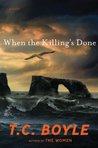
Book Review: When the Killing's Done by T.C. Boyle
When the Killing's Done by T.C. BoyleMy rating: 3 of 5 stars
I listened to the audio version of T.C. Boyle's When the Killing's Done, read by Anthony Heald. I'm glad I did, because I might not have finished reading it.
Boyle's unusual subject of killing invasive animals in the Channel Islands off the coast of California brings to light the controversy that rocked California years ago. A park service biologist pits herself against members of PETA and a fictitious group of animal rights advocates who want to stop the slaughter of feral pigs and rats. Straightforward enough, except the narrative ranges across three generations, multiple downings and boat sinkings and too many characters whose names begin with the same letter. I found it hard to keep up with Alma, Anise, Anabelle and others whose names began with A.
Not only does the narrative range back and forward in time, it is presented from the point of view of several characters. I'm sure seeing the character's name on the page would have helped. All the characters are brought together through the generations by the end of the book, which in this reader's mind was forced.
Head-hopping, i.e., written from differing points of view, often within the same paragraph, and characters with similar sounding names make the reader work hard to stay with the book to the end.
So, why the three stars? Because the reader was excellent. Alma, the biologist and protagonist, has fairly a straight-line thought process, although when she slips into confusion, and when Heald uses his pacing to portray that confusion, the book surges. Dave LaJoy, the antagonist, is full of anger, which might have become tedious on the printed page. Again, Heald saves the day with his rush of anger and near breathless delivery.
Would I recommend reading it? Only if you like convoluted sentences and tortured thoughts. Would I recommend it as an audio book? Definitely. Heald made all the difference in whether I cared for the characters or not.
Subscribe to:
Posts (Atom)